分享PCB设计评审批注 — 浏览器中的注释链接
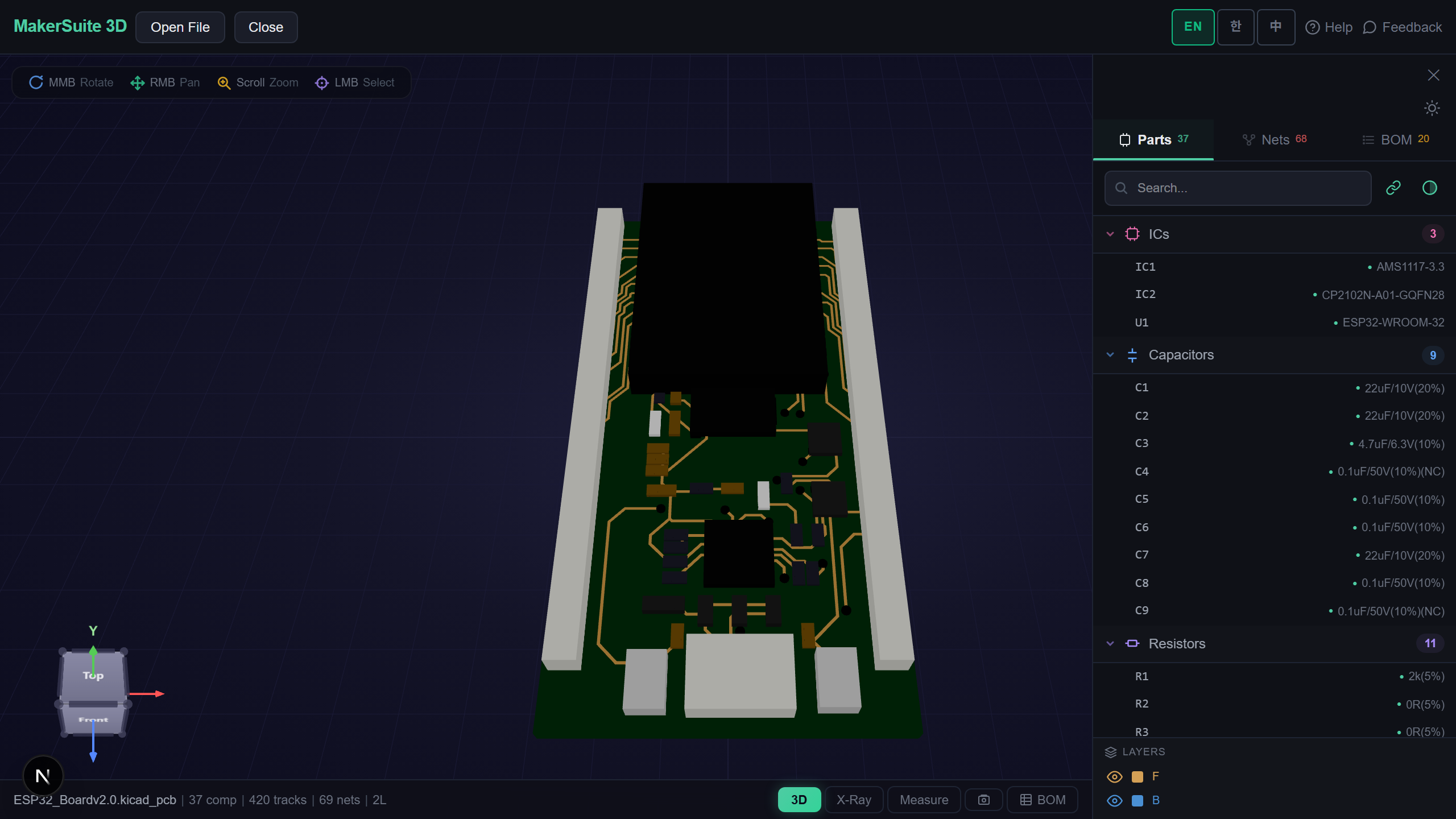
无需上传的设计审查
大多数PCB设计审查工具强制执行一种尴尬的工作流程:将电路板上传到供应商云、为每位审查者创建账户、配置权限,并期望文件保密。MakerSuite 3D颠覆了这种流程——您的PCB文件永远不会离开浏览器,您的审查批注只通过一个简单的URL传送。
什么是注释分享链接?
注释分享将您在PCB上固定的每个图钉——3D坐标、文本和颜色——直接编码到URL的哈希片段中。结果是一个像 pcbviewer.app/zh#ann=W1sxLjIzLC4uLiJdXQ 这样的链接,打开它就会显示已放置所有注释的查看器。由于编码在客户端进行,您与审查者之间不需要后端、数据库或账户系统。
主要功能
- 零服务器基础设施 — 注释存储在URL哈希中,因此查看器不需要数据库。只要pcbviewer.app在线,您的链接就会永远有效
- 隐私默认优先 — 您的PCB文件保留在浏览器中。URL仅携带注释元数据(位置、文本、颜色),永远不包含电路板本身
- 即时分享 — 点击工具栏中的Link按钮即可将分享URL复制到剪贴板。粘贴到Slack、电子邮件或GitHub问题中
- 加载时自动恢复 — 当审查者打开链接时,查看器会自动解析哈希并放置每个图钉。无需额外点击
- 适用于所有格式 — 注释图钉使用3D世界坐标,因此在KiCad、Gerber、Eagle、Altium和EasyEDA电路板上都能正确对齐
- Unicode安全 — 韩语、日语、中文或任何语言的审查批注都通过base64url + UTF-8正确编码
如何分享注释
- Open pcbviewer.app — 无需安装或注册
- 将PCB文件拖放到查看器,然后按工具栏中的Note(图钉)按钮进入注释模式
- 点击3D电路板上的任意点放置图钉。输入审查批注、选择颜色,然后按Enter
- 完成后,点击新的Link按钮(存在注释时出现在Note旁边)——分享URL将被复制到剪贴板
- 将URL发送给审查者。他们打开时,注释会自动就位出现
Try annotation sharing — drop a PCB, add notes, copy link.
免费试用 MakerSuite 3D为什么基于URL的分享胜过云端审查
基于云的审查平台在每一步都增加了摩擦:账户创建、许可证席位、文件上传限制,以及专有设计存放在他人服务器上的持续焦虑。URL片段分享消除了所有这些问题。接收者不需要账户。供应商不存储您的IP。链接像其他网页一样容易分享,也同样容易撤销(只需不重新发送)。
使用场景
- 快速审查者反馈:固定3-4个指出放置问题的图钉,发送链接,几分钟内即可获得评论
- GitHub PR审查:在PR描述中粘贴注释URL,精确显示哪些footprint需要更改
- 远程团队演练:视频通话前预先注释电路板的讨论点——无需尴尬的屏幕共享
- 师生反馈:教授用图钉标记学生的PCB作业,用一个链接回复
- 开源硬件:将注释链接附加到GitHub问题,让维护者快速理解布局问题
隐私保护
注释分享链接绝不传输您的PCB文件。浏览器仅将坐标/文本/颜色数据编码到URL片段中,按照HTTP惯例,片段从不发送到服务器——它们完全保留在客户端。即使pcbviewer.app的分析工具也无法看到您的注释内容。
常见问题
How do annotation share links work?
When you pin notes on your PCB in MakerSuite 3D, the coordinates, text, and color of every pin are encoded directly into the URL hash (#ann=...). Anyone who opens that URL sees the same PCB file with all your annotations already placed — no server, no upload, no account required.
Do my PCB files get uploaded somewhere?
No. Your PCB file never leaves your browser. Only the annotation metadata (position, text, color) is encoded into the URL. Recipients still need the same PCB file open to see the pins — annotations alone without the file are meaningless.
Is there a limit to how many annotations I can share?
URLs can hold roughly 50–80 annotations before becoming awkwardly long (most browsers accept URLs up to 2000 characters). For typical design review with 5–20 review comments, annotation sharing works perfectly.
Can I share annotations on any PCB format?
Yes. Annotation pins work on KiCad, Gerber, Eagle, Altium, and EasyEDA boards — any file the viewer can open. The coordinates are in 3D world space, so they stay aligned regardless of format.
How is this different from traditional PCB review tools?
Traditional tools (Altium 365, upverter, etc.) require uploading your PCB to their cloud, creating accounts, and managing permissions. MakerSuite 3D annotation sharing is zero-friction — paste a link, see the notes. Your IP stays on your machine.
相关文章
立即尝试注释分享——拖放PCB、添加批注、复制链接
打开 MakerSuite 3D