KiCad를 Altium으로 변환하는 법 — 솔직한 마이그레이션 가이드
Altium은 네이티브 KiCad 임포터 없음
이게 아무도 말하고 싶어하지 않는 변환 방향. Altium Designer는 EAGLE 임포터·Allegro 임포터·OrCAD 임포터 출시 — 하지만 KiCad 임포터 없음. 반대 방향(Altium → KiCad)은 KiCad 7부터 내장. KiCad → Altium은 팹 포맷 우회(Gerber·IPC-2581·ODB++), 서드파티 트랜슬레이터(Altium Vault Importer·번역 서비스), 또는 수동 재작성 중 하나 필요. 어느 경로도 스키매틱-PCB 링키지를 깨끗하게 보존 못 함. 이 글은 2026년 실제 세 경로, 각각이 보존·손실하는 것, 서드파티 비용 vs 수동 재작성 결정 시점을 다룸. 마이그레이션 고민하면 솔직한 첫 질문: 진짜 Altium 필요한가, 아니면 비기술적 이유로 팀이 강제하는가?
각 변환 경로가 실제로 하는 일
경로 1: KiCad의 ODB++ export → Altium Import. KiCad 7+가 ODB++(모든 레이어 아트워크 + 넷 데이터 번들 팹 포맷) export. Altium이 ODB++를 보드로 임포트, 단 스키매틱 없음. 레이아웃·구리·드릴·컴포넌트·넷 이름은 받지만 — 스키매틱·디자인 룰·편집 히스토리 잃음. 경로 2: IPC-2581 export → Altium Import. ODB++와 같은 트레이드오프지만 더 새 포맷에 더 넓은 벤더 지원. 경로 3: 서드파티 도구 — Altium 프로페셔널 서비스나 Cadence/Mentor 같은 벤더가 유료 번역 제공. 경로 4: 수동 재작성 — KiCad 디자인을 레퍼런스 이미지로 열고 Altium에서 스키매틱 재생성·PCB 재라우팅. 느리지만 깨끗한 Altium 네이티브 소스 생성. 대부분 팀이 경로 4 과소평가하다가 경로 1-3이 유지 불가 출력 만든 후 결국 그리로 감.
각 경로가 보존하는 것
- ODB++ export — 구리 레이어·드릴 홀·보드 외곽선·컴포넌트 배치·넷 이름·레이어별 디자인 룰. 스키매틱 없음, 라이브러리 링키지 없음, 편집 히스토리 없음.
- IPC-2581 — ODB++와 같은 스코프, 더 새 XML 기반 포맷. 모던 Altium 버전에서 통합 버그 더 적음, 하지만 변환 결과는 기능적으로 동일.
- Gerber + Excellon — ODB++가 깨끗하게 임포트 안 될 때 폴백 경로. Altium에서 수동 넷리스트 재구성 필요, Gerber는 넷 데이터 없음.
- Altium Vault Importer — 변환 실행 후 동작하는 .PrjPcb 다시 보내주는 유료 Altium 서비스. 프로젝트당 견적, 보통 복잡도에 따라 $500-2K.
- 수동 재작성 — 가장 느린 경로지만 깨끗한 Altium 소스 생성. KiCad 스키매틱의 PDF 플롯을 시각 레퍼런스로 사용, Altium에서 스키매틱 재생성, 그 다음 컴포넌트 배치하고 라우팅. 분 아니라 시간 단위로 계획.
- 넷 검증 — 경로 무관하게, 변환된 보드를 Altium에서 Gerber로 export하고 원본 KiCad 보드와 시각 비교. MakerSuite 3D가 두 포맷 다 처리, 나란히 비교 쉬움.
다섯 단계로 마이그레이션 접근
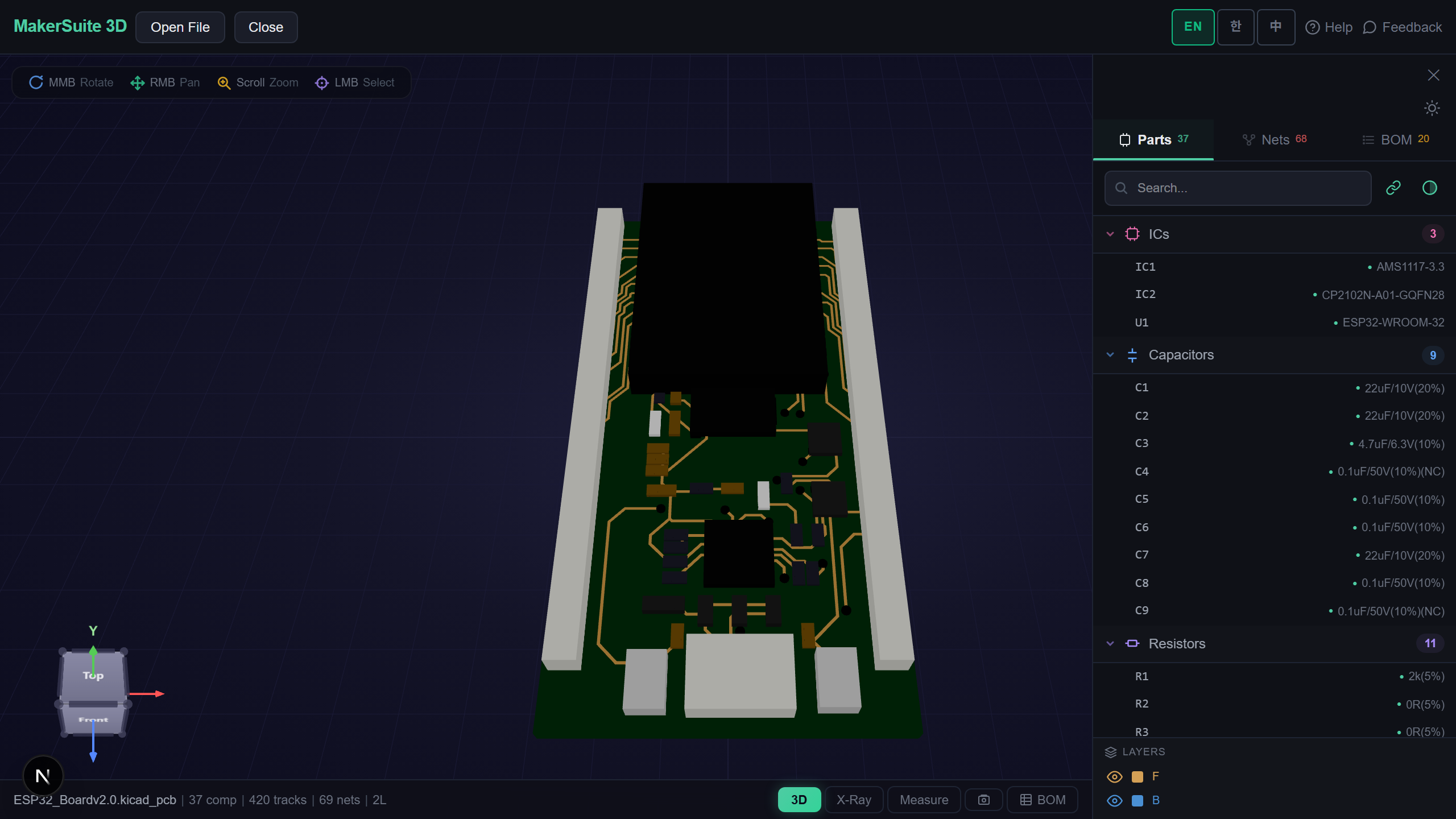
- Open pcbviewer.app — .kicad_pcb를 MakerSuite 3D에 먼저 드롭해서 소스 깨끗한지 확인. 소스의 레이어 이슈·컴포넌트 회전 문제·넷 데이터 갭이 변환에서 복합됨.
- ODB++ 먼저 시도 — KiCad PCB Editor > File > Fabrication Outputs > ODB++. 결과 .tgz를 Altium의 File > Import > ODB++로 열기. 점검: 컴포넌트가 맞는 위치에 있는지, 넷 이름 매치하는지, 보드 외곽선 정확한지.
- ODB++가 이슈 만들면 KiCad에서 IPC-2581 export하고 Altium에서 임포트. Altium 24+에서 더 새 포맷, 번역 버그 더 적음. 보존 데이터 스코프 동일.
- 변환된 보드와 같이 살지(편집 가능 스키매틱 없음, 팹 전용 핸드오프) 또는 진짜 Altium 네이티브 프로젝트로 수동 재작성할지 결정. 예산 룰: Altium에서 6개월 이상 편집할 보드는 수동 재작성 가치.
- 변환 검증 — Altium 보드를 Gerber로 export하고 원본 KiCad와 변환된 Altium Gerber를 MakerSuite 3D에 나란히 드롭. 시각 diff가 누락 패드·레이어 드리프트·조용한 번역 에러 잡음.
원본 KiCad 보드와 변환된 Altium 출력을 시각 비교 — Gerber export 둘 다 MakerSuite 3D에 드롭해서 사인오프 전 조용한 번역 에러 잡기.
MakerSuite 3D 무료로 써보기왜 이 마이그레이션이 고통스러운가
KiCad와 Altium은 다른 아키텍처 경로 선택. KiCad는 분리된 스키매틱/PCB와 라이브러리 파일의 S-expression 텍스트 파일 사용. Altium은 임베드된 스키매틱·PCB·라이브러리 데이터 있는 바이너리 OLE2/CFB 프로젝트 컨테이너(.PrjPcb). 근본적 표현 갭이라 캐노니컬 변환 없음 — 팹 전용 중간 포맷 통한 번역(스키매틱 손실) 또는 커스텀 바이너리-포맷 재작성(서드파티 트랜슬레이터가 청구하는 것) 둘 중 하나. Altium이 KiCad 마이그레이션을 쉽게 만들지 않을 상업적 인센티브까지 더하면 EDA 도구 세계의 영구 마찰점. 솔직한 조언: 동작하는 KiCad 프로젝트면 KiCad 유지. 팀이 컴플라이언스/PLM/고객 요구로 Altium 강제하면 원샷 변환 대신 수동 재작성 계획.
KiCad → Altium 변환이 발생하는 경우
- 고객 요구 — 바이어가 Altium 네이티브 산출물 스펙, KiCad 소스를 Altium에서 재구현해야 함
- PLM 통합 — 회사 PLM 시스템(Windchill·Teamcenter)이 Altium용 사전 구성, KiCad 안 맞음
- 팀 강제 — Altium 트레이닝된 엔지니어 채용, KiCad 프로젝트가 지속 유지보수 위해 변환해야 함
- 시뮬레이션 도구 — KiCad ngspice 통합으로 못 다루는 아날로그 작업에 Altium 생태계(SimTools·Mixed Signal) 필요
- 멀티 보드 프로젝트 — Altium에 기존 프로젝트 패밀리, 새 KiCad 디자인 보드가 기존 함대와 통합해야 함
브라우저에서 변환 검증
PCB 소스 파일은 풀 디자인 IP 포함. .kicad_pcb나 .PcbDoc을 클라우드 컨버터나 뷰어에 올리는 건 NDA 작업에 실제 리스크. MakerSuite 3D는 KiCad와 Altium 파일 둘 다 브라우저에서 JS로 파싱 — 서버·업로드·캐시 사본 없음. 한 탭에 원본 KiCad, 다른 탭에 변환된 Altium, 레이어별 비교. 조용한 회귀 — 뒤집힌 레이어·누락 존·회전된 부품 — 3D 뷰에서 즉시 보이고, 지오메트리는 머신 밖으로 안 나감.
수동 재구축이 변환을 이길 때
활발히 유지하면서 Altium에서 수십 번 리비전할 보드라면, 손실 임포트가 모든 리비전마다 누적되는 세금입니다. 임포트된 보드가 충분히 이해되지 않은 Altium 기능(rule-aware 폴리곤 pour, dynamic copper, 시트 심볼 있는 계층 회로도)에 부딪힐 때마다 수동으로 패치합니다. 6 리비전 후엔 Altium 프로젝트가 아무도 감사할 수 없는 임포트와 재구축 지오메트리의 모자이크가 됩니다. 디자인 시간 수백 시간 이상 가치 있는 활성 프로젝트엔 KiCad 버전을 reference로 Altium에서 처음부터 재구축 — 초기엔 느리지만 그 후엔 영원히 빠릅니다.
솔직한 첫 질문은 Altium이 진짜 필요한가입니다. 팀이 비기술적 이유(15년 전 Altium을 쓴 디렉터, 이유 없이 요구하는 고객)로 강제한다면 구체적 숫자로 반박하세요. Altium 라이선스는 시트당 연 $9,000+. KiCad는 PCIe Gen4 디자인, RF 보드, 16-layer 혼성 신호 스택업을 production에 출하합니다. 마이그레이션의 유일한 정직한 이유는 실제로 쓰는 특정 Altium 기능(Draftsman, ActiveBOM, Variant Management)이나 진짜 생태계 요구사항(Altium 365 Workspace 통합)입니다. 그 외 모든 것에서 변환 비용이 이득보다 큽니다.
자주 묻는 질문
Why doesn't Altium have a KiCad importer?
Two reasons. First, Altium has commercial incentive — KiCad is free, growing fast, and removing migration friction would help users leave Altium more easily than join. Second, the conversion is genuinely hard: Altium's binary OLE2/CFB project format and KiCad's S-expression text format have different schematic-to-PCB linking semantics, library structures, and rule engines. EAGLE→Altium and OrCAD→Altium importers exist because Altium acquired commercial agreements; KiCad has no acquirer to negotiate with. The third-party translator market (Altium Translation Services, professional services firms) fills the gap for paying customers.
What does ODB++ from KiCad actually transfer to Altium?
Layout-only. ODB++ is a fabrication format from Mentor Graphics (Siemens) — it bundles all copper layer artwork, drill data, board outline, component placements, and net data into a single .tgz archive. Altium imports it as a board (.PcbDoc) but no schematic, no library connections, no editable schematic-to-PCB linkage. You get a working layout that can be modified in Altium and re-fabricated, but every component is a one-off footprint with no library backing. Suitable for fab-only handoff; not suitable for ongoing engineering changes.
Is IPC-2581 better than ODB++ for this conversion?
Functionally similar, but IPC-2581 has fewer translation bugs in modern Altium versions. IPC-2581 is the open IPC standard equivalent of ODB++ — XML-based, royalty-free, designed to be vendor-neutral. KiCad 7+ exports both. In Altium 24+, IPC-2581 import is more recently maintained and handles edge cases (split planes, thermal spokes, exotic via shapes) more reliably. ODB++ still works but is more likely to need cleanup. Try IPC-2581 first; fall back to ODB++ if your Altium version doesn't import it cleanly.
Should I pay for a third-party translator?
Maybe, depending on your timeline and budget. Altium Translation Services and similar vendors charge $500-2000 per project for a full conversion that includes schematic regeneration. Worth it if: (1) the project is large (>500 components) and rebuilding manually would take weeks, (2) you need editable schematic-to-PCB linkage in Altium for ongoing maintenance, (3) the customer or PLM system specifically requires Altium-native source. Skip it if: (1) the board is small and rebuilding takes hours, (2) you only need fabrication output (ODB++ does that for free), (3) the project is one-shot and won't see further changes.
What's the realistic time estimate for manual rebuild?
Rule of thumb: 30-60 minutes per 10 components for an experienced Altium user. A 100-component board takes a full day; a 500-component board takes a week. Schematic capture is faster than PCB layout because Altium's schematic editor is highly scriptable and the netlist comes from KiCad as a reference. PCB layout is the bottleneck — re-routing in Altium follows your judgment, not the original KiCad routes, so it's a real design effort. Plan accordingly. The honest cost-benefit: under 100 components, manual rebuild beats automated translation for quality. Over 500, automated translation wins on time but loses on cleanliness.
관련 글
KiCad나 Altium 파일 드롭 — 시각으로 마이그레이션 검증
PCB 뷰어 열기